
Singer Chike & Frank Edoho Saga: Has Cheating Become Normal Online?

The internet is no longer driven by talent alone. In today’s digital era, scandals travel faster than achievements, and nothing spreads quicker online than sex allegations involving celebrities. The trending controversy surrounding Nigerian singer Chike and media personality Frank Edoho has once again exposed how modern social media feeds aggressively on relationship drama, emotional outrage, and public controversy.
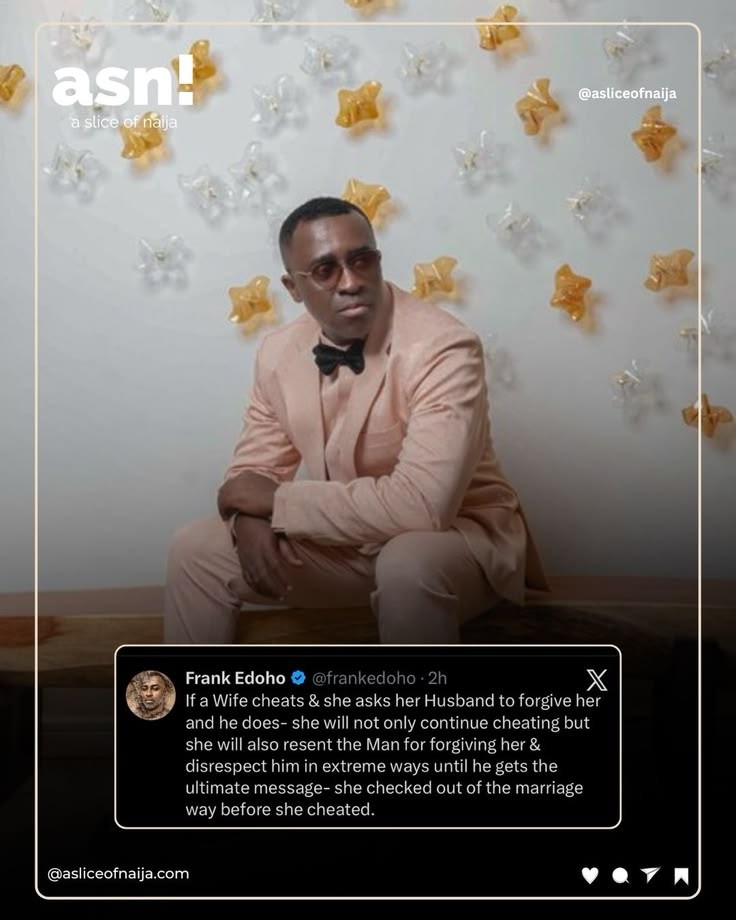
As the allegations continue dominating conversations across TikTok, Facebook, Instagram, and X, many Nigerians have noticed something unexpected — a surprising number of women online appear to be defending the idea of a married woman allegedly getting involved with another man. For some people, that reaction is more shocking than the scandal itself.
The debate quickly moved beyond Chike and Frank Edoho and became a larger conversation about relationships in modern society. Some online users argued that unhappy marriages push people into emotional connections elsewhere. Others claimed that nobody truly “owns” their partner emotionally. While many strongly condemned the alleged affair, others focused more on emotional satisfaction than loyalty or commitment.
This growing mindset reveals how much social media has changed public morality and relationship values. Years ago, cheating allegations involving celebrities usually ended with widespread condemnation. Today, the internet often turns these situations into entertainment, debate content, memes, and fan wars instead of serious discussions about trust and accountability.
One major reason these scandals trend so heavily is because outrage sells. Social media algorithms reward emotional content. The more controversial a topic becomes, the more engagement it receives. Blogs repost it, influencers react to it, podcasts analyze it, and content creators turn it into daily discussions. In many cases, a relationship scandal generates more attention than a celebrity’s actual career achievements.
Another reason some women may appear supportive online is emotional relatability. Many people project their personal relationship experiences into celebrity controversies. If they have experienced emotional neglect, toxic relationships, or heartbreak before, they may sympathize more with the woman involved rather than judging the action itself. Social media reactions are often emotional before they are logical.
Celebrity culture also plays a major role. Fans sometimes defend famous people regardless of the allegations because admiration clouds objectivity. In today’s internet culture, popularity can easily influence public opinion, especially when the accused person already has a loyal fanbase.
The Chike and Frank Edoho saga may eventually fade from headlines, but the conversation it sparked reflects a deeper issue in modern society. We are now living in a time where controversy creates visibility faster than talent, where private relationships become public entertainment, and where online validation often shapes public morality.
The real question is no longer just about who allegedly did what. The bigger question is this: Has the digital era made scandals the fastest route to attention, relevance, and internet fame?
For more viral entertainment stories, celebrity updates, and digital culture discussions, visit trendio.blog